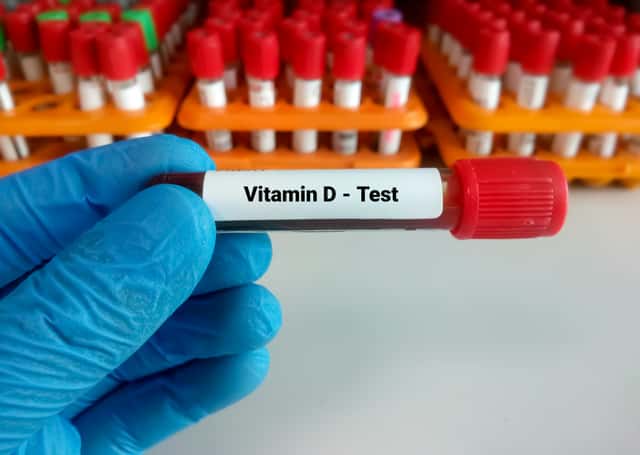
витамин Д
А Тест на витамин D анализ крови, используемый для измерения Уровень витамина D в вашем теле, в первую очередь для оценки здоровье костей, иммунная функция, и Состояние питания. Это помогает обнаружить недостаток, недостаточность, или токсичность.
Название теста:
-
Наиболее распространенным и точным тестом является:
25-Тест гидроксивитамина D (Также написано как 25(Ох) d)
Почему это сделано:
Чтобы оценить:
-
Дефицит витамина D или недостаточность
-
Причины Боль в кости или слабость
-
Риск остеопороз
-
Условия вроде рахит, остеомаляция, или дисбаланс кальция
-
Эффективность витамина D добавки
Уровень витамина D в крови:
| Уровень (нг/мл) | Интерпретация |
|---|---|
| < 20 | Дефицит |
| 20–29 | Недостаточный |
| 30–50 | Оптимально / достаточно |
| 50–100 | Высокий, но не токсичный |
| > 100–150+ | Возможно токсичный (гипервитаминоз D) |
Что измеряют тест:
-
Всего 25 (OH) d в крови (включает в себя как формы D2 и D)
-
Это так не измерять активное витамин D (1,25 (OH) ₂D) Если конкретно не упорядочено в редких случаях
Кто должен пройти тестирование?
-
Люди с симптомами Дефицит витамина D (усталость, боль в костях, частые инфекции)
-
Те, кто с Ограниченное воздействие солнца
-
Люди с более темная кожа (который производит меньше витамина D от солнечного света)
-
Пожилые люди, По мере того, как их кожа снижает витамин D
-
Пациенты с остеопороз, хроническая болезнь почек, или Мальбообразные расстройства
Как работает тест:
-
Образец крови взят (натощак обычно не требуется)
-
Результаты обычно доступны в течение 24–48 часов
О пакете
А Тест на витамин D анализ крови, используемый для измерения Уровень витамина D в вашем теле, в первую очередь для оценки здоровье костей, иммунная функция, и Состояние питания. Это помогает обнаружить недостаток, недостаточность, или токсичность.
Название теста:
-
Наиболее распространенным и точным тестом является:
25-Тест гидроксивитамина D (Также написано как 25(Ох) d)
Почему это сделано:
Чтобы оценить:
-
Дефицит витамина D или недостаточность
-
Причины Боль в кости или слабость
-
Риск остеопороз
-
Условия вроде рахит, остеомаляция, или дисбаланс кальция
-
Эффективность витамина D добавки
Уровень витамина D в крови:
| Уровень (нг/мл) | Интерпретация |
|---|---|
| < 20 | Дефицит |
| 20–29 | Недостаточный |
| 30–50 | Оптимально / достаточно |
| 50–100 | Высокий, но не токсичный |
| > 100–150+ | Возможно токсичный (гипервитаминоз D) |
Что измеряют тест:
-
Всего 25 (OH) d в крови (включает в себя как формы D2 и D)
-
Это так не измерять активное витамин D (1,25 (OH) ₂D) Если конкретно не упорядочено в редких случаях
Кто должен пройти тестирование?
-
Люди с симптомами Дефицит витамина D (усталость, боль в костях, частые инфекции)
-
Те, кто с Ограниченное воздействие солнца
-
Люди с более темная кожа (который производит меньше витамина D от солнечного света)
-
Пожилые люди, По мере того, как их кожа снижает витамин D
-
Пациенты с остеопороз, хроническая болезнь почек, или Мальбообразные расстройства
Как работает тест:
-
Образец крови взят (натощак обычно не требуется)
-
Результаты обычно доступны в течение 24–48 часов

Отзывы
Включения и исключения
Включения
1. 25-Гидроксивитамин D (25 (ОН) d)
-
Это Главный и самый точный маркер уровней витамина D в организме.
-
Это включает в себя:
-
Витамин D2 (эргокальциферол) – из источников и добавок растений
-
Витамин D3 (холекальциферол) – от воздействия на солнце, животных источников и добавок
-
-
Уровень общего объема 25 (OH) D отражает магазины витамина D вашего организма.
Дополнительные включения (на некоторых расширенных панелях или по специальному запросу):
Хотя это обычно не является частью базового теста, некоторые передовые версии могут также включать:
Исключения
| Исключенный тест | Для чего это |
|---|
| Кальций (сывороточный кальций) | Оценивает здоровье костей и влияние витамина на поглощение кальция |
| Фосфор | Важно для прочности костей и работает вместе с кальцием и витамином D |
| Магний | Необходимо для метаболизма витамина D и здоровья костей |
| Гормон околощитовидной железы (Pth) | Регулирует кальций и витамин D; Помогает обнаружить расстройства околощитовидной железы |
| 1,25-Дигидроксивитамина D (активная форма) | Измеряет активную форму витамина D |
| Разрушение витамина D2 и D | Различает, является ли витамин D от пищи/добавок (D2) или солнечного света (D3) |
| Тест на плотность костей (DEXA сканирование) | Оценивает фактическую потерю костей или остеопороз, а не часть какого -либо анализа крови |
| Функциональные тесты на печень и почки | Органы, участвующие в метаболизме витамина D; не включено, если только часть более широкой панели |
О лечении
А Проверка здоровья Профилактическое медицинское обследование, предназначенное для оценки общего состояния здоровья и выявления ранних признаков заболеваний или факторов риска. Эти проверки обычно включают серию физических обследований, лабораторные тесты и диагностические скрининг, адаптированные к возрасту, полу, истории болезни и образу жизни.
Обычные проверки здоровья необходимы для раннего выявления таких состояний, как диабет, сердечные заболевания, гипертония и рак. Они помогают врачам контролировать критические показатели, такие как артериальное давление, уровень холестерина, функция органов и многое другое. В зависимости от пакета или поставщика, проверка здоровья может варьироваться от основных анализов крови до передовой визуализации, таких как КТ или МРТ всего тела.