Packages starting from
$7500
Need help in choosing the right package for your medical trip?
Your Health data is protected with us
Transforming Lives with Craniotomy and Excision of Tumour Surgery
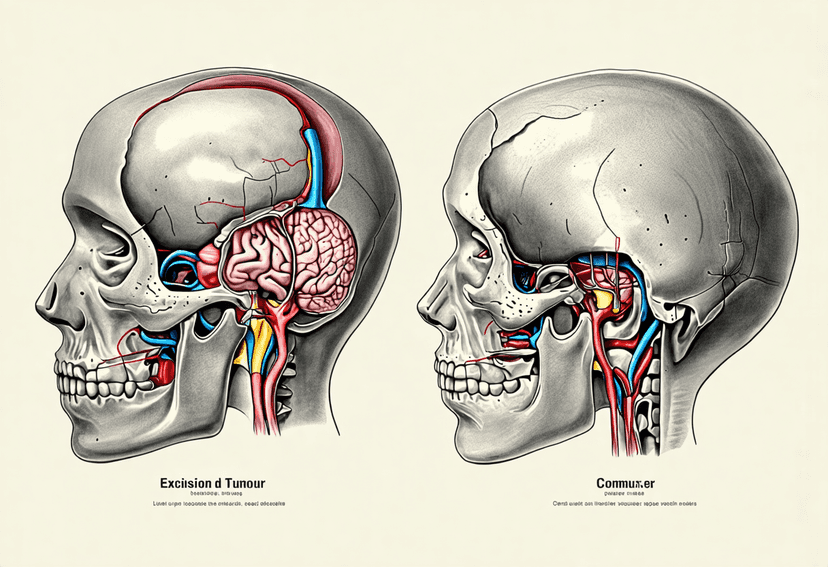
Craniotomy and excision of tumor surgery is a critical neurosurgical procedure designed to remove brain tumors or abnormal growths. Here are some detailed descriptions and additional options:
Detailed Description: This procedure involves the following steps:
Pre-Surgical Planning:
- Advanced imaging techniques such as MRI or CT scans are used to locate the tumor precisely.
- Preoperative planning includes mapping out the safest route to access the tumor while minimizing damage to healthy brain tissue.
Craniotomy:
- Under general anesthesia, a portion of the scalp is shaved and a precise incision is made.
- A section of the skull, known as a bone flap, is carefully removed to expose the brain.
Tumor Excision:
- The surgeon uses specialized instruments and techniques to excise the tumor.
- Intraoperative MRI or CT scans may be used to ensure complete removal of the tumor.
- In some cases, intraoperative neurophysiological monitoring is employed to protect critical brain functions.
Closure:
- Once the tumor is removed, the bone flap is replaced and secured with plates and screws.
- The scalp is sutured back in place, and the patient is moved to the recovery room.
Post-Surgery Care:
- Patients typically stay in the ICU for close monitoring immediately after surgery.
- Rehabilitation may include physical therapy, occupational therapy, and speech therapy, depending on the tumor's location and the patient's neurological status.
- Follow-up imaging and consultations are necessary to monitor for tumor recurrence and manage any complications.
Additional Options for Description:
Option 1:
Craniotomy and Tumor Removal: A craniotomy and tumor removal involves creating an opening in the skull to access the brain and remove a tumor. This complex surgery aims to excise as much of the tumor as possible while protecting vital brain functions, using advanced imaging and surgical techniques for precision and safety.
Option 2:
Neurosurgical Tumor Excision: Neurosurgical tumor excision is a procedure where part of the skull is temporarily removed to allow access to a brain tumor. The surgeon uses specialized tools to carefully remove the tumor, striving to preserve healthy brain tissue. The bone flap is then replaced, and the scalp is stitched closed.
Option 3:
Brain Tumor Surgery with Craniotomy: This procedure entails a craniotomy, where a section of the skull is removed to provide access to the brain for tumor removal. The surgery uses cutting-edge imaging and neurosurgical techniques to ensure the precise and safe excision of the tumor, followed by meticulous reconstruction of the skull and scalp.
Option 4:
Craniotomy for Tumor Excision: A craniotomy for tumor excision involves surgically removing a portion of the skull to access and remove a brain tumor. The procedure focuses on maximizing tumor removal while minimizing impact on surrounding brain tissue, employing advanced technology for enhanced accuracy and patient safety.
These descriptions offer a comprehensive overview of craniotomy and tumor excision surgery, highlighting its complexity, precision, and the advanced techniques used to ensure patient safety and optimal outcomes.
4.0
90% Rated Value for Money
Why Choose us?

95%
Success Rate

0
Craniotomy and Excision of Tumour Surgery Surgeons

0
Craniotomy and Excision of Tumour Surgery

0
Hospitals Around the world

3+
Lives touched
Overview
Craniotomy and excision of tumor surgery is a critical neurosurgical procedure designed to remove brain tumors or abnormal growths. Here are some detailed descriptions and additional options:
Detailed Description: This procedure involves the following steps:
Pre-Surgical Planning:
- Advanced imaging techniques such as MRI or CT scans are used to locate the tumor precisely.
- Preoperative planning includes mapping out the safest route to access the tumor while minimizing damage to healthy brain tissue.
Craniotomy:
- Under general anesthesia, a portion of the scalp is shaved and a precise incision is made.
- A section of the skull, known as a bone flap, is carefully removed to expose the brain.
Tumor Excision:
- The surgeon uses specialized instruments and techniques to excise the tumor.
- Intraoperative MRI or CT scans may be used to ensure complete removal of the tumor.
- In some cases, intraoperative neurophysiological monitoring is employed to protect critical brain functions.
Closure:
- Once the tumor is removed, the bone flap is replaced and secured with plates and screws.
- The scalp is sutured back in place, and the patient is moved to the recovery room.
Post-Surgery Care:
- Patients typically stay in the ICU for close monitoring immediately after surgery.
- Rehabilitation may include physical therapy, occupational therapy, and speech therapy, depending on the tumor's location and the patient's neurological status.
- Follow-up imaging and consultations are necessary to monitor for tumor recurrence and manage any complications.
Additional Options for Description:
Option 1:
Craniotomy and Tumor Removal: A craniotomy and tumor removal involves creating an opening in the skull to access the brain and remove a tumor. This complex surgery aims to excise as much of the tumor as possible while protecting vital brain functions, using advanced imaging and surgical techniques for precision and safety.
Option 2:
Neurosurgical Tumor Excision: Neurosurgical tumor excision is a procedure where part of the skull is temporarily removed to allow access to a brain tumor. The surgeon uses specialized tools to carefully remove the tumor, striving to preserve healthy brain tissue. The bone flap is then replaced, and the scalp is stitched closed.
Option 3:
Brain Tumor Surgery with Craniotomy: This procedure entails a craniotomy, where a section of the skull is removed to provide access to the brain for tumor removal. The surgery uses cutting-edge imaging and neurosurgical techniques to ensure the precise and safe excision of the tumor, followed by meticulous reconstruction of the skull and scalp.
Option 4:
Craniotomy for Tumor Excision: A craniotomy for tumor excision involves surgically removing a portion of the skull to access and remove a brain tumor. The procedure focuses on maximizing tumor removal while minimizing impact on surrounding brain tissue, employing advanced technology for enhanced accuracy and patient safety.
These descriptions offer a comprehensive overview of craniotomy and tumor excision surgery, highlighting its complexity, precision, and the advanced techniques used to ensure patient safety and optimal outcomes.