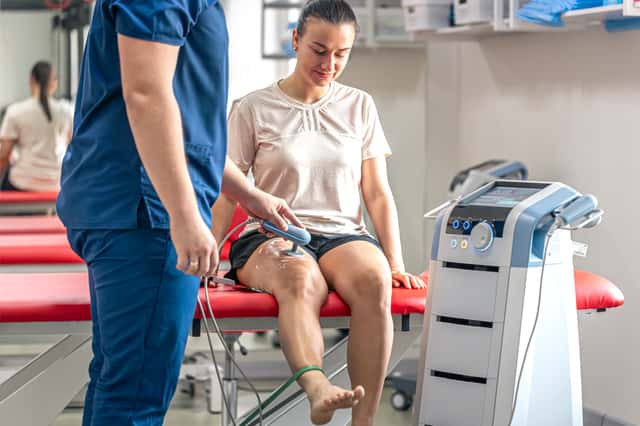
EMG (elektromiografi) - satu anggota badan
An EMG for one limb is a focused diagnostic test that assesses the electrical activity of muscles in either one arm or one leg. It is used to evaluate muscle and nerve function and detect conditions such as nerve compression, neuropathy, or muscle disorders affecting a specific limb.
The test involves inserting a small, fine needle electrode into several muscles of the selected limb to record electrical signals both at rest and during movement.
Tentang Paket
An EMG for one limb is a focused diagnostic test that assesses the electrical activity of muscles in either one arm or one leg. It is used to evaluate muscle and nerve function and detect conditions such as nerve compression, neuropathy, or muscle disorders affecting a specific limb.
The test involves inserting a small, fine needle electrode into several muscles of the selected limb to record electrical signals both at rest and during movement.

Testimonial
Penyertaan & Pengecualian
Penyertaan
EMG Procedure for One Limb Only
– Focused on a single arm or leg
– 4–6 key muscles typically tested depending on symptoms-
Electrode Needle Insertion & Monitoring
-
Use of Electromyography Equipment
-
Report Interpretation by a Neurologist
-
Printed or Digital Test Report
Pengecualian
- Nerve Conduction Study (NCS) – Often recommended with EMG but may not be included in a basic one-limb package
EMG for Additional Limbs – If needed, testing other limbs will incur additional charges
Specialist Consultation (Pre/Post Test) – Unless part of a combined package
Medication or Treatment for Diagnosis – Follow-up care or prescriptions are billed separately
Insurance Coverage – May depend on indication and individual policy terms
Tentang Perawatan
A Health Check-Up is a preventive medical examination designed to assess your overall health status and detect early signs of diseases or risk factors. These check-ups typically include a series of physical examinations, laboratory tests, and diagnostic screenings tailored to age, gender, medical history, and lifestyle.
Routine health check-ups are essential for early detection of conditions such as diabetes, heart disease, hypertension, and cancer. They help doctors monitor critical indicators like blood pressure, cholesterol levels, organ function, and more. Depending on the package or provider, a health check-up can range from basic blood tests to advanced imaging like CT scans or full-body MRIs.