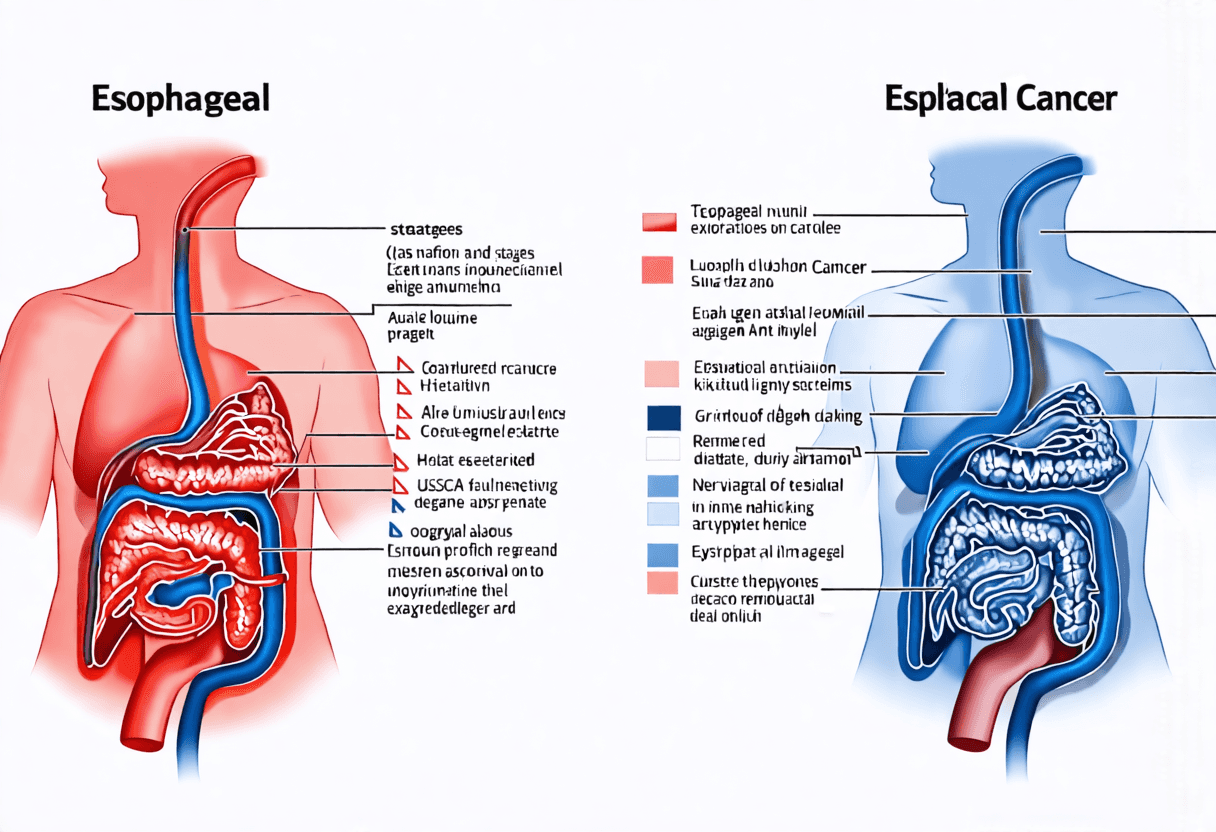
Tahapan Kanker Kerongkongan
23 Oct, 2024
 perjalanan kesehatan
When it comes to esophageal cancer, the most critical factor in determining treatment options and survival rates is the stage of the disease. The stage of esophageal cancer refers to the extent of the tumor's spread within the esophagus, nearby lymph nodes, and other parts of the body. Understanding the different stages of esophageal cancer can help patients and their loved ones navigate the complex journey of diagnosis, treatment, and recovery.
What are the Stages of Esophageal Cancer?
The most commonly used staging system for esophageal cancer is the TNM system, which stands for Tumor, Node, and Metastasis. This system takes into account the size and location of the primary tumor (T), the involvement of nearby lymph nodes (N), and the presence of distant metastases (M). The TNM system categorizes esophageal cancer into five stages, from stage 0 to stage IV.
Prosedur paling populer di India



Stage 0: Carcinoma In Situ
In this early stage, abnormal cells are found only in the lining of the esophagus and have not invaded deeper tissues. Stage 0 esophageal cancer is often curable with endoscopic mucosal resection or esophagectomy.

Perawatan Kesehatan
Beri diri Anda waktu untuk bersantai
Harga Terendah Dijamin!

Harga Terendah Dijamin!
Main Symptoms and Diagnosis
Esophageal cancer often develops without noticeable symptoms in its early stages. However, as the tumor grows, patients may experience symptoms such as difficulty swallowing, chest pain, weight loss, and coughing or choking on food. If you're experiencing any of these symptoms, it's essential to consult a doctor, who will perform a physical exam, medical history review, and diagnostic tests like endoscopy, biopsy, and imaging studies to confirm the diagnosis.
Endoscopy and Biopsy
During an endoscopy, a flexible tube with a camera and light on the end is inserted through the mouth or nose to visualize the inside of the esophagus. A biopsy involves removing a small tissue sample from the esophagus, which is then examined under a microscope for cancer cells.
Treatment Options
The treatment approach for esophageal cancer depends on the stage of the disease, overall health, and personal preferences. Treatment options may include surgery, chemotherapy, radiation therapy, or a combination of these. Surgery, such as esophagectomy, is often the primary treatment for early-stage esophageal cancer, while chemotherapy and radiation therapy may be used to shrink the tumor before surgery or to relieve symptoms in advanced cases.
618 pasien dari India pilih paket ini untuk mereka Paket Transplantasi Hati

Surgery for Esophageal Cancer
Esophagectomy involves removing the affected part of the esophagus and reconnecting the remaining healthy portions. This surgery can be performed through an open incision or laparoscopically, using several small incisions.
Living with Esophageal Cancer
A diagnosis of esophageal cancer can be overwhelming, but with the right support and treatment, it's possible to manage the disease and maintain a good quality of life. Patients should focus on maintaining a healthy diet, staying hydrated, and managing symptoms like pain, fatigue, and difficulty swallowing. It's also essential to stay connected with loved ones, join a support group, and seek counseling to cope with the emotional challenges of esophageal cancer.
Conclusion
Esophageal cancer is a complex and aggressive disease, but understanding its stages and treatment options can empower patients to take control of their health. By recognizing the symptoms, seeking timely medical attention, and staying committed to treatment, individuals with esophageal cancer can improve their chances of survival and quality of life.
Paket kebugaran paling populer





Blog Terkait

HealthTrip: Panduan Anda untuk memimpin pusat transplantasi multi-organ
perjalanan kesehatan

HealthTrip: Pilihan Perawatan Otak Lanjutan dengan ahli ahli bedah ahli
perjalanan kesehatan

HealthTrip: Global IVF Treatment - Journey to Parenthood
Jalan Anda menuju Parenthood dengan HealthTrip
HealthTrip: Menavigasi Opsi & Harga Transplantasi Hati Internasional
perjalanan kesehatan
HealthTrip: 10 negara teratas untuk pariwisata medis transplantasi hati di 2025
Pariwisata medis HealthTrip
HealthTrip: 15 ahli bedah transplantasi hati teratas untuk pasien internasional
perjalanan kesehatan