Forfaits à partir de
$8000
Besoin d'aide pour choisir le bon forfait pour votre voyage médical ?
Vos données de santé sont protégées avec nous
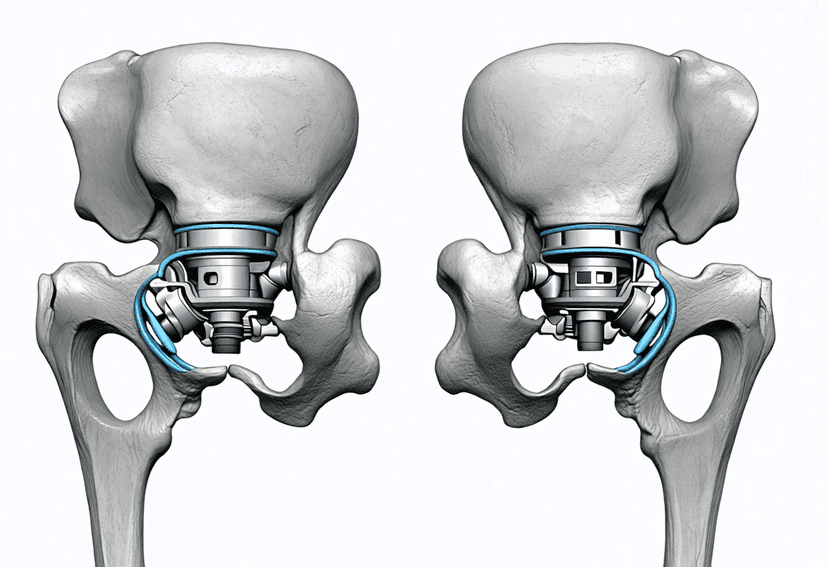
Transformer des vies avec Remplacement total de la hanche bilatérale
Bilateral total hip replacement is a surgical procedure in which both of the patient's hip joints are replaced simultaneously or sequentially in close succession. This surgery is typically performed on patients suffering from severe hip pain and mobility issues due to conditions such as osteoarthritis, rheumatoid arthritis, osteonecrosis, or other degenerative hip diseases.
Procedure Overview:
- Surgical Technique: The procedure involves removing the damaged cartilage and bone from the hip socket (acetabulum) and the femoral head (the upper end of the thigh bone). These components are then replaced with artificial ones. The femoral head is replaced with a metal or ceramic ball mounted on a stem that fits into the thigh bone. The acetabulum is replaced with a durable plastic cup, which may also have a metal outer shell.
- Approaches: Bilateral hip replacements can be performed in two main ways:
- Simultaneous Bilateral Hip Replacement: Both hips are replaced during a single surgical session. This approach reduces overall hospital stays and rehabilitation time but is generally reserved for patients in very good health due to the higher initial surgery and anesthesia risk.
- Staged Bilateral Hip Replacement: The hip replacements are done in two separate surgeries, usually weeks or months apart. This approach is often recommended for patients who may not tolerate the stress of simultaneous surgery due to age or underlying health conditions.
Advantages:
- Efficiency in Recovery: When both hips are replaced at once, the patient goes through one recovery period and rehabilitation program, which can be more efficient and less disruptive overall.
- Improved Mobility and Pain Relief: Successful bilateral hip replacements can dramatically reduce or eliminate pain and significantly improve overall joint function and quality of life.
Recovery:
- Hospital Stay: Typically, the hospital stay is slightly longer than for a single hip replacement, especially if both hips are done simultaneously.
- Rehabilitation: Rehabilitation begins almost immediately after surgery, with the goal to strengthen the muscles around the new joints and regain mobility. The total recovery time can vary, but most patients return to normal activities within three to six months, depending on their overall health and the success of their rehabilitation.
Bilateral total hip replacement is a major but often highly successful procedure aimed at restoring mobility and quality of life for patients with significant hip joint damage in both hips.
4.0
92% Évalué Rapport qualité-prix
Pourquoi nous choisir ?

99%
Taux de réussite

0
Remplacement total de la hanche bilatérale Chirurgiens

1+
Remplacement total de la hanche bilatérale

0
Hôpitaux dans le monde entier

5+
Vies touchées
Aperçu
Bilateral total hip replacement is a surgical procedure in which both of the patient's hip joints are replaced simultaneously or sequentially in close succession. This surgery is typically performed on patients suffering from severe hip pain and mobility issues due to conditions such as osteoarthritis, rheumatoid arthritis, osteonecrosis, or other degenerative hip diseases.
Procedure Overview:
- Surgical Technique: The procedure involves removing the damaged cartilage and bone from the hip socket (acetabulum) and the femoral head (the upper end of the thigh bone). These components are then replaced with artificial ones. The femoral head is replaced with a metal or ceramic ball mounted on a stem that fits into the thigh bone. The acetabulum is replaced with a durable plastic cup, which may also have a metal outer shell.
- Approaches: Bilateral hip replacements can be performed in two main ways:
- Simultaneous Bilateral Hip Replacement: Both hips are replaced during a single surgical session. This approach reduces overall hospital stays and rehabilitation time but is generally reserved for patients in very good health due to the higher initial surgery and anesthesia risk.
- Staged Bilateral Hip Replacement: The hip replacements are done in two separate surgeries, usually weeks or months apart. This approach is often recommended for patients who may not tolerate the stress of simultaneous surgery due to age or underlying health conditions.
Advantages:
- Efficiency in Recovery: When both hips are replaced at once, the patient goes through one recovery period and rehabilitation program, which can be more efficient and less disruptive overall.
- Improved Mobility and Pain Relief: Successful bilateral hip replacements can dramatically reduce or eliminate pain and significantly improve overall joint function and quality of life.
Recovery:
- Hospital Stay: Typically, the hospital stay is slightly longer than for a single hip replacement, especially if both hips are done simultaneously.
- Rehabilitation: Rehabilitation begins almost immediately after surgery, with the goal to strengthen the muscles around the new joints and regain mobility. The total recovery time can vary, but most patients return to normal activities within three to six months, depending on their overall health and the success of their rehabilitation.
Bilateral total hip replacement is a major but often highly successful procedure aimed at restoring mobility and quality of life for patients with significant hip joint damage in both hips.