Forfaits à partir de
$11000
Besoin d'aide pour choisir le bon forfait pour votre voyage médical ?
Vos données de santé sont protégées avec nous
Transformer des vies avec Scoliose
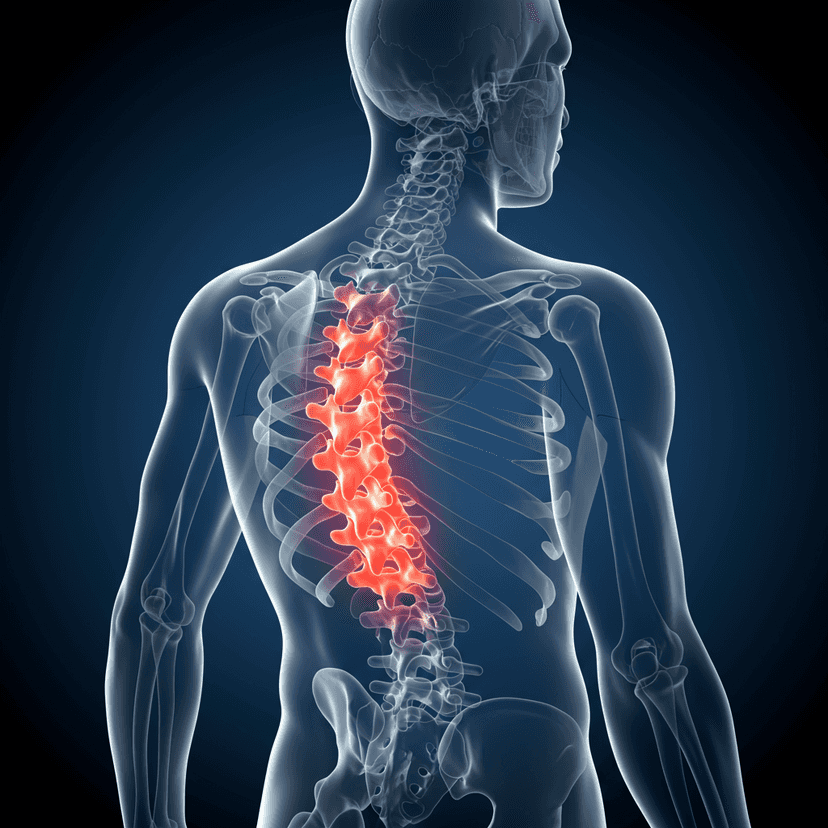
Scoliosis is a medical condition where the spine curves sideways, typically in an "S" or "C" shape. While mild scoliosis may not cause significant issues, moderate to severe forms can lead to pain, posture problems, breathing difficulties, and reduced mobility. The condition can appear at any age but is most commonly detected during the growth spurt just before puberty (adolescent idiopathic scoliosis).
Treatment depends on the severity of the curve, age, underlying cause, and progression risk. Mild cases may only need observation, while moderate cases might require bracing. Severe or progressive scoliosis may necessitate surgical correction, typically spinal fusion. Physiotherapy is essential in all stages for posture correction, core strengthening, and improving overall function.
5.0
94% Évalué Rapport qualité-prix
Avantages de Scoliose
Prevents curve progression
-
Improves posture and spinal alignment
-
Reduces back pain and discomfort
-
Enhances lung and heart function (in severe curves)
-
Boosts physical mobility and balance
-
Increases self-esteem and body image
Pourquoi nous choisir ?

97%
Taux de réussite

2+
Scoliose Chirurgiens

0
Scoliose

2+
Hôpitaux dans le monde entier

0
Vies touchées
Aperçu
Scoliosis is a medical condition where the spine curves sideways, typically in an "S" or "C" shape. While mild scoliosis may not cause significant issues, moderate to severe forms can lead to pain, posture problems, breathing difficulties, and reduced mobility. The condition can appear at any age but is most commonly detected during the growth spurt just before puberty (adolescent idiopathic scoliosis).
Treatment depends on the severity of the curve, age, underlying cause, and progression risk. Mild cases may only need observation, while moderate cases might require bracing. Severe or progressive scoliosis may necessitate surgical correction, typically spinal fusion. Physiotherapy is essential in all stages for posture correction, core strengthening, and improving overall function.
Symptômes
Uneven shoulders or waist
-
One hip higher than the other
-
Noticeable curve in the spine
-
Leaning to one side
-
Back pain or fatigue after standing
-
Breathing difficulty (in severe cases)
Causes
Idiopathic (unknown origin – most common in adolescents)
-
Congenital (vertebral deformities present at birth)
-
Neuromuscular (e.g., due to cerebral palsy, muscular dystrophy)
-
Degenerative (age-related disc degeneration)
-
Genetic predisposition
-
Trauma or spinal injury
Les étapes typiques impliquées dans Scoliose
1. Diagnosis:
-
Physical exam, X-rays, MRI/CT scan to assess the spinal curve (Cobb angle).
2. Observation:
-
For curves <20 degrees with low progression risk.
-
Regular follow-up every 4–6 months, especially during growth periods.
3. Bracing:
-
Recommended for curves between 20–40 degrees in growing children/adolescents.
-
Types include Boston brace, Milwaukee brace, and nighttime braces.
4. Physical Therapy:
-
Core strengthening, stretching, and posture correction.
-
Schroth method and other scoliosis-specific exercise programs.
5. Surgery:
-
For curves >45–50 degrees or progressive scoliosis.
-
Spinal fusion is the most common surgery, involving rods and screws to realign and fuse the spine.
-
Alternatives include vertebral body tethering (a growth modulation technique in selected cases).
6. Post-Treatment Care:
-
Rehabilitation, pain management, and follow-up imaging.
-
Lifestyle modifications to avoid recurrence or further issues.


Médecins

4.0
Consulte à:

4.0
Consulte à: