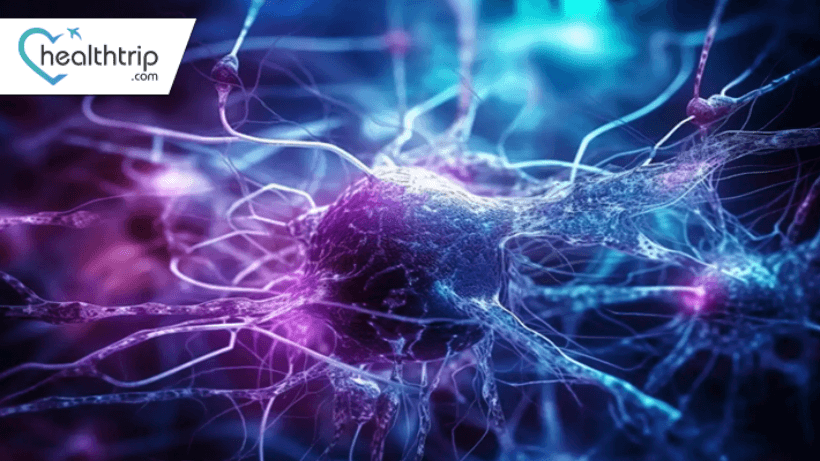
Cellules souches dans les traitements des troubles neurologiques
03 Nov, 2023
 Équipe Healthtrip
Les cellules souches sont la pierre angulaire de la médecine régénérative, car elles sont la clé de la réparation des tissus et des organes endommagés.. Leur capacité unique à se développer en différents types de cellules en fait un point central pour des traitements médicaux et des recherches révolutionnaires.
Procédures les plus populaires dans Inde


Que sont les cellules souches ?
Les cellules souches sont les matières premières du corps, les cellules à partir desquelles toutes les autres cellules spécialisées sont générées.. Dans les bonnes conditions, ces cellules se divisent pour former plus de cellules appelées cellules filles. Cette division peut soit créer davantage de cellules souches (auto-renouvellement), soit se différencier en cellules spécialisées (puissance) ayant une fonction plus spécifique, comme les cellules musculaires, les globules rouges ou les neurones. Cette adaptabilité fait de la thérapie par cellules souches un traitement révolutionnaire potentiel pour diverses maladies, notamment les troubles neurologiques.

Soins de bien-être
Donnez-vous le temps de vous détendre
Prix les plus bas garantis !

Prix les plus bas garantis !
Types de cellules souches et leurs rôles
Lorsqu’on discute des types de cellules souches, il est essentiel de comprendre leurs sources et leurs capacités :
726 patients de Inde choisir ce forfait pour leur Forfait transplantation hépatique
- Cellules souches embryonnaires (CSE): Dérivées d'embryons, ces cellules souches pluripotentes peuvent se transformer en n'importe quel type de cellule, ce qui les rend incroyablement polyvalentes dans la recherche médicale.
- Cellules souches adultes (ASC): Présentes dans des tissus comme la moelle osseuse et le cerveau, ces cellules souches multipotentes ont une capacité un peu plus limitée à se différencier.
- Cellules souches pluripotentes induites (CSPi): Les iPSC constituent une avancée majeure dans la recherche sur les cellules souches. Ils sont reprogrammés à partir de cellules adultes pour se comporter comme des cellules souches embryonnaires, offrant ainsi une source renouvelable de divers types de cellules sans les préoccupations éthiques associées aux CES.'
Cellules souches dans les traitements neurologiques
1. Régénération et réparation
Les troubles neurologiques impliquent souvent la perte ou le dysfonctionnement des neurones. Les cellules souches ont le potentiel de révolutionner ce domaine de la médecine en remplaçant ou en réparant les neurones endommagés, ce qui pourrait améliorer considérablement la fonction neurologique ou même inverser les symptômes de maladies comme la maladie de Parkinson, la maladie d'Alzheimer ou la sclérose en plaques.
2. Médecine personnalisée
Les cellules souches ouvrent la voie à une médecine personnalisée. En convertissant les cellules d'un patient en CSPi, puis en les différenciant en neurones, les scientifiques peuvent créer des modèles de troubles neurologiques spécifiques au patient. Cette approche permet une meilleure compréhension de la progression de la maladie et de la couture des traitements à l'individu, conduisant potentiellement à des thérapies plus efficaces avec moins d'effets secondaires.
Le domaine de la recherche médicale a connu un changement de paradigme avec l’avènement de la thérapie par cellules souches, notamment dans le traitement des troubles neurologiques.. Cette section examine les dernières avancées en matière de thérapie par cellules souches pour la maladie d'Alzheimer, la maladie de Parkinson, la sclérose en plaques (SEP) et le rétablissement après un accident vasculaire cérébral et un traumatisme crânien (TCC).
Recherches et avancées actuelles
un. Progrès des cellules souches dans le traitement de la maladie d'Alzheimer
La maladie d'Alzheimer, la forme de démence la plus courante, est depuis longtemps une maladie pour laquelle les options de traitement sont limitées.. Cependant, la thérapie par cellules souches apparaît comme un potentiel changeur de jeu. Les scientifiques explorent comment les cellules souches peuvent sécréter des facteurs de croissance pour protéger les neurones et encourager les mécanismes de réparation du cerveau. Les études animales ont montré des résultats prometteurs, les traitements par cellules souches conduisant à une amélioration de la cognition et de la mémoire. Ces résultats sont un phare d'espoir pour les patients d'Alzheimer, signalant une nouvelle ère potentielle dans le traitement de la maladie d'Alzheimer.
b. Progrès dans le traitement de la maladie de Parkinson avec des cellules souches
Le traitement de la maladie de Parkinson a été révolutionné par la recherche sur les cellules souches. La perte de neurones productrices de dopamine est une caractéristique de Parkinson, conduisant aux symptômes moteurs bien connus. La thérapie par cellules souches vise à remplacer ces neurones, et les premiers essais cliniques ont montré des résultats prometteurs. Les patients ont connu des améliorations significatives de la fonction motrice après des transplantations de cellules souches, marquant un pas en avant significatif dans le traitement de la maladie de Parkinson.
c. Thérapie par cellules souches de la sclérose en plaques
La sclérose en plaques (SEP) est une maladie auto-immune qui endommage le système nerveux central. La thérapie par cellules souches, en particulier les transplantations autologues des cellules souches hématopoïétiques, est prometteuse dans l'arrêt de la progression de la maladie. Des essais cliniques ont signalé que cette forme de thérapie de cellules souches de sclérose en plaques peut entraîner une réduction des rechutes et une amélioration des symptômes, offrant un nouvel espoir pour ceux qui luttent contre cette affection difficile.
d. Améliorer la récupération des accidents vasculaires cérébraux et des traumatismes crâniens grâce aux cellules souches
La guérison d’un accident vasculaire cérébral ou d’un traumatisme crânien peut être un processus long et difficile. La thérapie par cellules souches est à l'avant-garde des traitements innovants, les essais cliniques indiquant que les cellules souches peuvent améliorer considérablement la récupération fonctionnelle. Le potentiel des cellules souches à réparer les tissus cérébraux endommagés et à améliorer les processus naturels de guérison du cerveau pourrait transformer l'approche thérapeutique de la guérison des accidents vasculaires cérébraux et des traumatismes crâniens.
L'avenir de la thérapie par cellules souches en neurologie
Le paysage du traitement neurologique subit un changement sismique avec les progrès de la thérapie par cellules souches, propulsés par les percées dans l’édition génétique CRISPR et la bio-impression 3D..
un. dition de gènes CRISPR : Précision et potentiel
La technologie CRISPR offre un moyen de modifier avec précision les gènes des cellules souches, corrigeant potentiellement les anomalies génétiques contribuant aux maladies neurologiques. Cela pourrait conduire à des thérapies personnalisées à base de cellules souches pour des maladies comme la maladie de Huntington, offrant des traitements ciblés et efficaces.
b. 3D Bio-impression : fabriquer de nouveaux tissus
3La bio-impression D va encore plus loin dans la thérapie par cellules souches en créant des tissus structurés qui peuvent s'intégrer dans le cerveau. Cette technologie est prometteuse de réparer les dommages causés par des accidents vasculaires cérébraux ou des maladies dégénératives comme les parkinson en bioprinent les tissus neuronaux de remplacement qui restaurent les fonctions perdues.
c. Synergie dans le traitement: CRISPR et BioPrinting 3D
La combinaison de la précision génétique de CRISPR avec les capacités structurelles de la bio-impression 3D pourrait conduire à des traitements hautement personnalisés et efficaces. Cette synergie pourrait révolutionner la façon dont nous abordons les troubles neurologiques, en passant de la gestion des symptômes à la restauration des fonctions.
En conclusion, la thérapie par cellules souches annonce une ère de transformation en neurologie, offrant des remèdes potentiels à des maladies autrefois considérées comme irréversibles.. Bien que le chemin soit complexe et marqué par des considérations scientifiques et éthiques, les progrès réalisés dans le traitement des troubles neurologiques avec des cellules souches alimentent une vision pleine d'espoir pour un avenir où la régénération et la réparation pourraient devenir monnaie courante dans la pratique clinique.
Forfaits bien-être les plus populaires





Blogs associés
Thérapie des cellules souches en orthopédie: l'avenir de la médecine régénérative
Déverrouiller le potentiel de la thérapie des cellules souches dans les soins orthopédiques
Thérapie par cellules souches pour les troubles neurologiques
Explorez le potentiel de la thérapie des cellules souches dans le traitement neurologique
L'avenir de la thérapie sur les cellules souches
Renseignez-vous sur l'avenir passionnant de la thérapie des cellules souches et
Thérapie par cellules souches pour les blessures orthopédiques
Découvrez comment la thérapie par cellules souches peut aider à les blessures orthopédiques
Les avantages de la thérapie par cellules souches
Explorez les nombreux avantages de la thérapie des cellules souches pour votre
Cellules souches dans le traitement du cancer
Découvrez comment la thérapie des cellules souches révolutionne le traitement du cancer