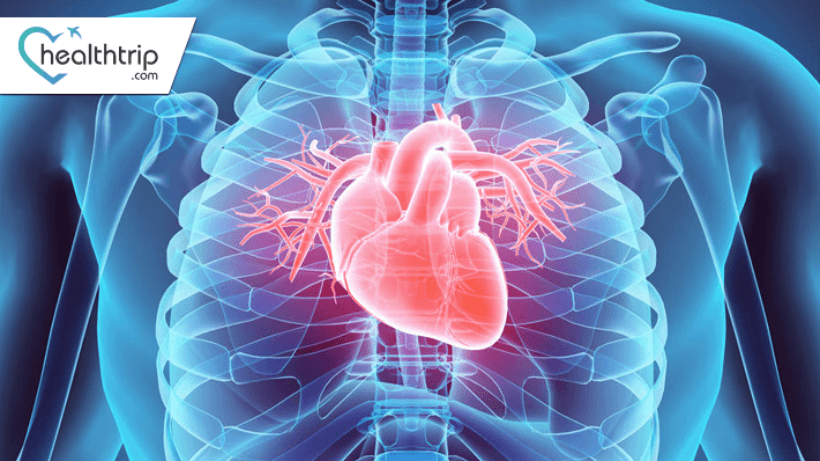
TEP pour les maladies cardiovasculaires : diagnostic et traitement
11 May, 2023
 Docteur. Divya Nagpal
Les TEP sont couramment utilisées pour le diagnostic et la stadification du cancer, mais elles constituent également un outil important dans le diagnostic et le traitement des maladies cardiovasculaires.. Ce blog passe en revue son utilisation de la TEP pour les maladies cardiovasculaires, y compris ses avantages, ses risques et ses limites.
Qu’est-ce que les maladies cardiovasculaires ?
Les maladies cardiovasculaires sont un groupe de maladies qui affectent le cœur et les vaisseaux sanguins, notamment les maladies coronariennes, l'insuffisance cardiaque et les arythmies.. Ces conditions peuvent provoquer une variété de symptômes tels que des douleurs thoraciques, un essoufflement et une fatigue, et peuvent entraîner de graves complications telles que les crises cardiaques et les accidents vasculaires cérébraux.
Procédures les plus populaires dans Inde


Diagnostic des maladies cardiovasculaires
Le diagnostic d'une maladie cardiovasculaire peut être difficile car de nombreux symptômes ne sont pas spécifiques et peuvent être causés par d'autres conditions médicales.. De plus, les outils de diagnostic traditionnels tels que l'électrocardiogramme (ECG) et l'échocardiographie ne fournissent pas toujours une image claire du problème sous-jacent. C'est là qu'un TEP peut aider. Les TEP peuvent fournir des images détaillées du cœur et des vaisseaux sanguins, permettant aux médecins de détecter des anomalies que d'autres tests d'imagerie ne peuvent pas détecter. Il peut également être utilisé pour suivre les progrès du traitement et évaluer l’efficacité des interventions.

Soins de bien-être
Donnez-vous le temps de vous détendre
Prix les plus bas garantis !

Prix les plus bas garantis !
Comment fonctionne la TEP pour les maladies cardiovasculaires ?
Son TEP pour les maladies cardiovasculaires fonctionne de la même manière que son TEP pour le cancer. Une petite quantité d'une substance radioactive appelée radiotraceur est injectée dans la veine du patient. Le radiotracer se rend au cœur et est repris par le myocarde. Un scanner TEP détecte les positons émis par les traceurs radioactifs et les utilise pour créer une image tridimensionnelle de son cœur.
Avantages de la TEP dans les maladies cardiovasculaires
L’un des principaux avantages de la TEP dans le traitement des maladies cardiovasculaires est sa capacité à fournir des images très détaillées du cœur et des vaisseaux sanguins.. Cela aide le médecin à détecter les problèmes que les autres tests d'imagerie ne peuvent pas détecter. Les analyses des TEP aident également les médecins à déterminer la gravité d'une condition médicale et à déterminer le meilleur traitement.
Un autre avantage de la TEP est qu’elle est non invasive et ne vous expose pas aux radiations.. Cela en fait une alternative plus sûre aux autres tests d'imagerie tels que l'angiographie coronarienne, qui consiste à injecter un agent de contraste dans un vaisseau sanguin et à exposer la patiente à ses rayons X.
785 patients de Inde choisir ce forfait pour leur Forfait transplantation hépatique

Risques et limites de la TEP dans les maladies cardiovasculaires
Les TEP sont généralement sûrs, mais ils comportent certains risques. Les radiotraceurs utilisés dans les TEP émettent de petites quantités de rayonnement et peuvent augmenter le risque de cancer chez certains patients. Cependant, l'exposition aux radiations des analyses des TEP est relativement faible, et les avantages de la numérisation l'emportent généralement sur les risques.
Une autre limite des TEP pour les maladies cardiovasculaires est qu’ils ne sont pas toujours couverts par une assurance.. Certains régimes d'assurance considèrent les TEP comme expérimentales ou exploratoires et peuvent ne pas couvrir le coût du test. De plus, les analyses des TEP pour les maladies cardiovasculaires peuvent être coûteuses et ne sont pas disponibles dans toutes les régions. Les patients peuvent avoir besoin d'aller dans un centre spécialisé pour les tests.
Le potentiel des TEP dans les maladies cardiovasculaires
La TEP peut être utilisée pour diagnostiquer diverses maladies cardiovasculaires telles que les maladies coronariennes, l'insuffisance cardiaque et les arythmies.. Voici quelques façons d’utiliser la TEP pour des conditions médicales spécifiques.
1. Maladie de l'artère coronaire
La TEP peut être utilisée pour évaluer le flux sanguin vers le cœur et détecter les blocages dans les artères coronaires.. Cela aide les médecins à déterminer le meilleur traitement, notamment : B. Angioplastie ou pontage.
2. Insuffisance cardiaque
Les TEP peuvent être utilisées pour évaluer la fonction cardiaque et déterminer l'étendue des dommages causés par l'insuffisance cardiaque.. Cela aide le médecin à planifier un traitement pour améliorer la fonction cardiaque et réduire les symptômes.
3. Arythmie
Une TEP peut être utilisée pour identifier l'emplacement et l'étendue de l'activité électrique anormale dans le cœur à l'origine de l'arythmie.. Cela aide les médecins à déterminer les meilleures options de traitement telles que les médicaments, les dispositifs implantables et les procédures d'ablation.
4. Tumeur cardiaque
Les TEP peuvent être utilisées pour détecter les tumeurs cardiaques et évaluer leur propagation. Cela aide les médecins à décider du meilleur traitement, comme la chirurgie ou la radiothérapie.
5. Inflammation cardiaque
La TEP peut être utilisée pour détecter une inflammation cardiaque causée par diverses affections, notamment la myocardite et la sarcoïdose.. Cela aide les médecins à déterminer le degré d'inflammation et à planifier un traitement pour soulager les symptômes et prévenir les complications. En plus de ces conditions spécifiques, les TEP peuvent également être utilisées pour suivre les progrès du traitement et évaluer l'efficacité des interventions. Par exemple, les analyses des TEP peuvent être utilisées pour déterminer si un patient répond aux médicaments ou pour surveiller le processus de guérison après la chirurgie.
Forfaits bien-être les plus populaires





Blogs associés

Répartition complète des coûts de la chirurgie oculaire avec HealthTrip
En savoir plus sur les médecins, les hôpitaux, les procédures et la récupération pour la chirurgie oculaire

Comment se préparer à votre chirurgie oculaire en Inde
En savoir plus sur les médecins, les hôpitaux, les procédures et la récupération pour la chirurgie oculaire

Effets secondaires et gestion des risques de la chirurgie oculaire
En savoir plus sur les médecins, les hôpitaux, les procédures et la récupération pour la chirurgie oculaire
Soins de suivi pour les patients en chirurgie oculaire ayant une aide à la santé
En savoir plus sur les médecins, les hôpitaux, les procédures et la récupération pour la chirurgie oculaire

Meilleure infrastructure hospitalière pour la chirurgie oculaire
En savoir plus sur les médecins, les hôpitaux, les procédures et la récupération pour la chirurgie oculaire

À quoi s'attendre lors d'une consultation en chirurgie oculaire
En savoir plus sur les médecins, les hôpitaux, les procédures et la récupération pour la chirurgie oculaire