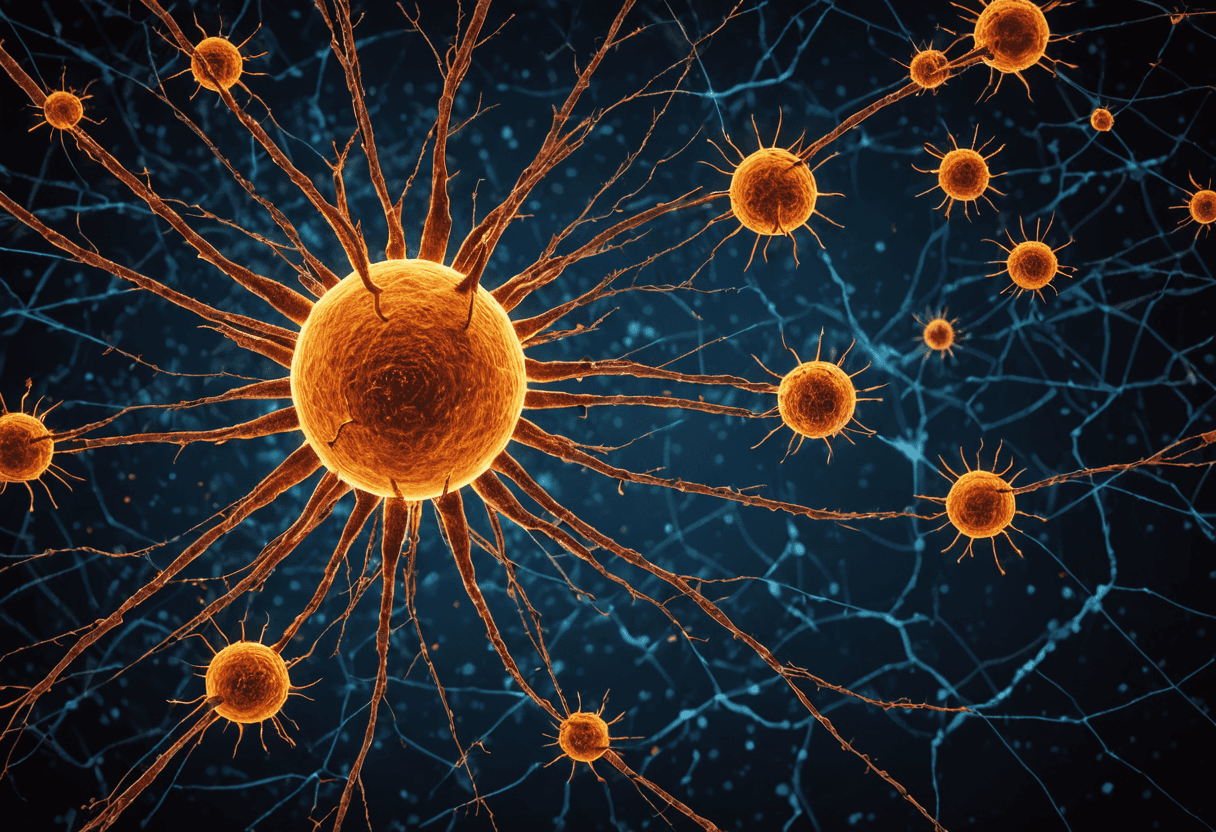
المنطقة المجهولة من سرطان الغدد الليمفاوية T-Cell
04 Oct, 2024
 هيلث تريب
Imagine waking up one morning, feeling a slight fatigue that you can't shake off, and a few weeks later, being diagnosed with a rare and aggressive cancer that affects a vital part of your immune system. This is the harsh reality faced by thousands of people diagnosed with T-cell lymphoma every year. Despite being a relatively unknown and understudied form of cancer, T-cell lymphoma has been making headlines in recent years due to its increasing incidence rates and poor treatment outcomes. As researchers and medical professionals delve deeper into the mysteries of this disease, one thing is clear – T-cell lymphoma is an uncharted territory that requires immediate attention and action.
What is T-Cell Lymphoma?
T-cell lymphoma is a type of cancer that affects the T-cells, a vital component of our immune system responsible for fighting infections and diseases. It occurs when T-cells become cancerous and multiply uncontrollably, leading to the formation of tumors in the lymph nodes, spleen, or other lymphoid tissues. There are over 30 subtypes of T-cell lymphoma, each with distinct characteristics and prognosis. The most common subtype is peripheral T-cell lymphoma (PTCL), which accounts for approximately 60% of all T-cell lymphoma cases.
الإجراءات الأكثر شعبية في الهند





The Devastating Impact on Patients and Families
The diagnosis of T-cell lymphoma can be devastating for patients and their families. The symptoms are often vague and nonspecific, making it challenging to diagnose the disease in its early stages. Patients may experience fatigue, fever, weight loss, and swollen lymph nodes, which can be misattributed to other conditions. As the disease progresses, patients may experience severe pain, skin lesions, and respiratory distress, significantly impacting their quality of life. The emotional toll of living with T-cell lymphoma cannot be overstated, with many patients experiencing anxiety, depression, and feelings of isolation.

العلاجات الصحية
امنح نفسك الوقت للاسترخاء
أقل الأسعار مضمونة!

أقل الأسعار مضمونة!
The Challenges of Diagnosis and Treatment
Diagnosing T-cell lymphoma is a complex process that requires a high degree of expertise and specialized testing. The disease often mimics other conditions, making it difficult to differentiate it from more common diseases. The diagnosis is typically made through a combination of imaging tests, biopsies, and laboratory tests. Treatment options for T-cell lymphoma are limited, and the disease is often resistant to conventional chemotherapy and radiation therapy. The most effective treatment approach is a combination of chemotherapy, targeted therapy, and immunotherapy, which can have severe side effects and varying degrees of success.
The Role of Immunotherapy in T-Cell Lymphoma Treatment
Immunotherapy has revolutionized the treatment of T-cell lymphoma in recent years. This approach harnesses the power of the immune system to fight cancer cells, offering a more targeted and effective treatment option. Checkpoint inhibitors, such as pembrolizumab and nivolumab, have shown promising results in clinical trials, with some patients experiencing complete remission. However, immunotherapy is not without its challenges, and researchers are still grappling with the optimal way to administer these treatments and manage their side effects.
The Future of T-Cell Lymphoma Research
Despite the challenges posed by T-cell lymphoma, researchers are making significant strides in understanding the biology of the disease and developing new treatments. The discovery of novel biomarkers and genetic mutations has opened up new avenues for targeted therapy. Researchers are also exploring the potential of CAR-T cell therapy, which involves genetically modifying a patient's T-cells to attack cancer cells. The development of more effective and targeted treatments is crucial to improving patient outcomes and reducing the burden of this devastating disease.
774 المرضى من الهند اختر هذه الحزمة لهم باقة زراعة الكبد

أشهر حزم العافية





المدونات ذات الصلة
أراضي سرطان الأمعاء الدقيقة
سرطان الأمعاء الدقيقة هو نوع نادر من السرطان

المنطقة المجهولة لسرطان الفرج
سرطان الفرج هو نوع من السرطان الذي يؤثر على

أراضي الغدة الصعترية غير المنفثقة
الغدة الصعترية نوع نادر من السرطان الذي يؤثر على

السرطان المنسي: نظرة على سرطان الملحق
التذييل سرطان هو نوع نادر من السرطان الذي يؤثر

الحصان الأسود للسرطان: فهم سرطان الغدانية الكيسي
سرطان الغدان الكيسي هو نوع نادر من السرطان

ساركومة شحمية: سرطان الدهون
ساركومة الشحوم هي نوع من السرطان الذي يؤثر على الدهون